Sponges, Cloths and Scrubbers: Which to Use and When to Replace Them
The wrong scrubber can scratch a pan or a stovetop in one pass, and the right one can turn a ten-minute job into two. It's worth knowing what each one is for, and since sponges stay damp and full of food, how to keep them from becoming the dirtiest thing in the kitchen.
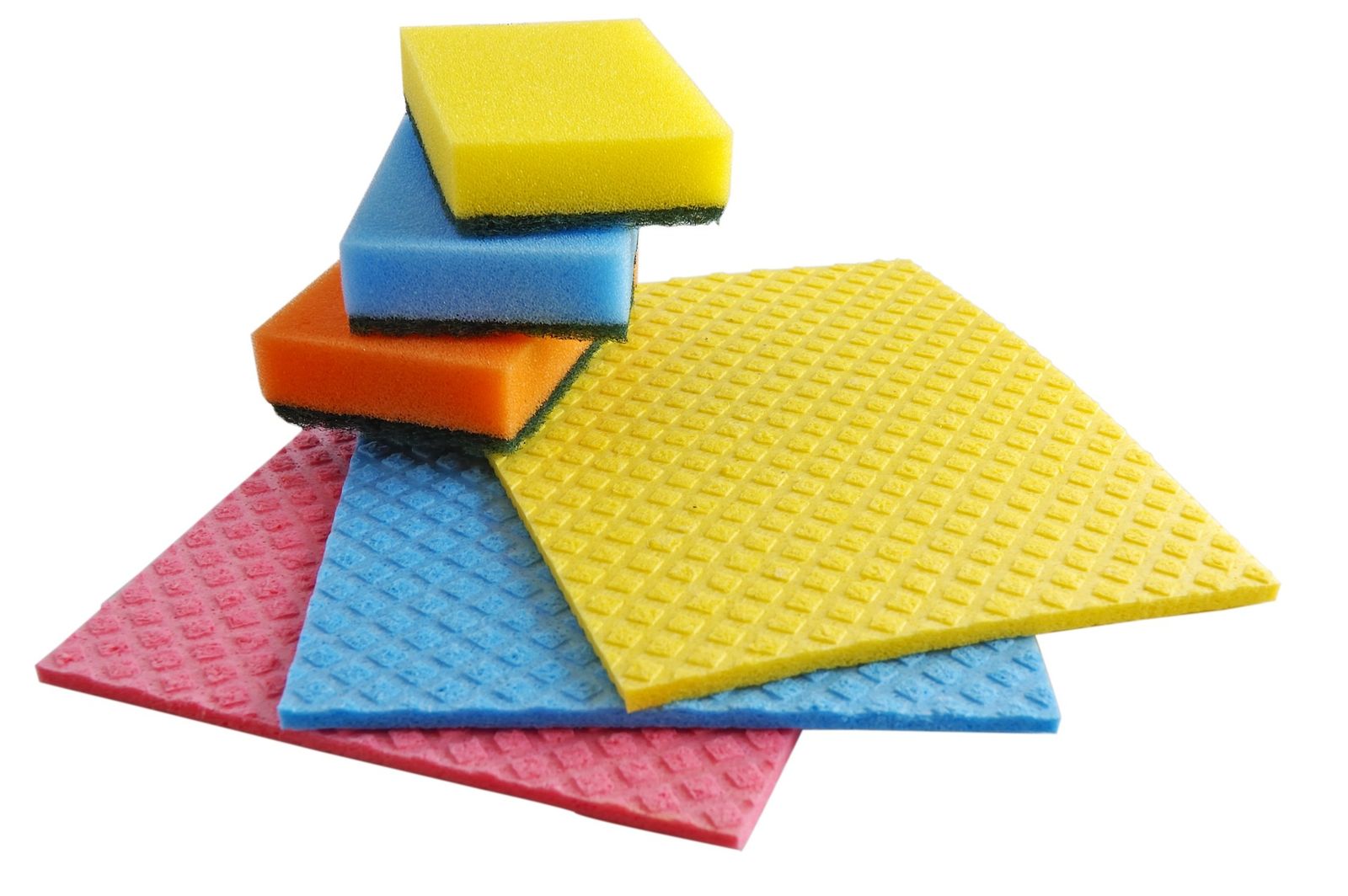
What each one is for
- Cellulose sponge (soft, no scrubbing side): wiping counters, tables and appliance fronts, and soaking up spills
- Non-scratch scrub sponge (usually a blue or white scrubbing side): everyday dishes, nonstick pans, sinks, tubs and stovetops. It's the safest all-round choice
- Heavy-duty scrub sponge (usually a green scrubbing side): baked-on food on cast iron, glass baking dishes and stainless steel pots. It will scratch nonstick coatings, glass cooktops, acrylic and plastic
- Cellulose-cotton dishcloths (often called Swedish dishcloths): stiff when dry, soft when wet. Very absorbent, good for counters and dishes, and machine washable, so they last much longer than sponges
- Microfiber cloths: dusting, glass, mirrors and stainless steel. They pick up dust and grease with just water. See our mirror and glass guide
- Steel wool and metal scouring pads: rusty grill grates and badly burnt cast iron or stainless pots. Never use them on stainless steel appliances, nonstick, glass, chrome or enamel; they scratch, and on stainless they can leave tiny metal bits that rust
When in doubt, test a scrubber on a hidden spot, or start with the gentlest one and work up.
Keeping sponges clean
A kitchen sponge stays wet and warm and collects food, which is exactly what bacteria need. To keep it under control:
- Rinse it well and squeeze it out after every use
- Let it dry between uses on a rack or a sponge holder, not in a puddle by the sink
- Sanitize it a few times a week: microwave a thoroughly wet sponge for one minute (never a dry one, and never one with metal fibers), or run it through the dishwasher with a heated dry cycle
- Don't wipe up raw meat juices with it. Use a paper towel, then disinfect the counter
When to replace them
- Kitchen sponges: every week or two, sooner if they smell or start to fall apart. Sanitizing helps, but it doesn't make an old sponge new
- Cellulose-cotton dishcloths: wash them in the washer or dishwasher regularly; one cloth often lasts several months
- Microfiber cloths: they last for hundreds of washes. Replace them when they stop picking up dust or start leaving lint
- Scrub brushes: replace when the bristles splay or the base looks stained. Run plastic brushes through the dishwasher weekly
Use different colors for different jobs
Pick one color for dishes, another for kitchen counters, and another for the bathroom, and stick to it. It keeps the sponge that cleaned the toilet away from your plates, which is the whole point. Our kitchen cleaning tips and bathroom guide cover the rest of each room.
Washing cloths
Wash dishcloths and microfiber cloths in hot water with detergent, without fabric softener, which coats the fibers and makes them less absorbent. Keep microfiber away from lint-heavy towels in the wash.
Frequently Asked Questions
How often should you replace a kitchen sponge?
Every week or two, and sooner if it smells or falls apart. Sanitizing between replacements helps, but it does not make an old sponge new.
How do you sanitize a kitchen sponge?
Microwave a thoroughly wet sponge for one minute, or run it through the dishwasher with a heated dry cycle. Never microwave a dry sponge or one with metal fibers.
Which side of a scrub sponge scratches?
Green heavy-duty scrubbing sides can scratch nonstick pans, glass cooktops, acrylic and plastic. Blue or white non-scratch sides are safe for most everyday surfaces.
Can I use steel wool on stainless steel?
Not on stainless steel appliances or sinks. Steel wool scratches the finish and can leave metal particles that rust. Save it for rusty grill grates and badly burnt pots.
