Bathroom mold grows where water sits and air doesn't move: caulk lines, grout, the corners of the ceiling, behind the shampoo bottles. Small patches on hard surfaces are a normal cleaning job. The bigger fix is drying the room out so it doesn't come back.
Mildew is the gray, white or light-black film that sits on the surface of grout and tile and wipes away fairly easily. Mold is usually darker, often fuzzy or slimy, and can root into caulk, silicone and drywall. You clean both the same way on hard surfaces. The difference matters when it's in something porous.
Wear rubber gloves and eye protection, and an N95 mask if you're sensitive or the patch is large. Open a window and run the exhaust fan. Scrubbing mold releases spores into the air.
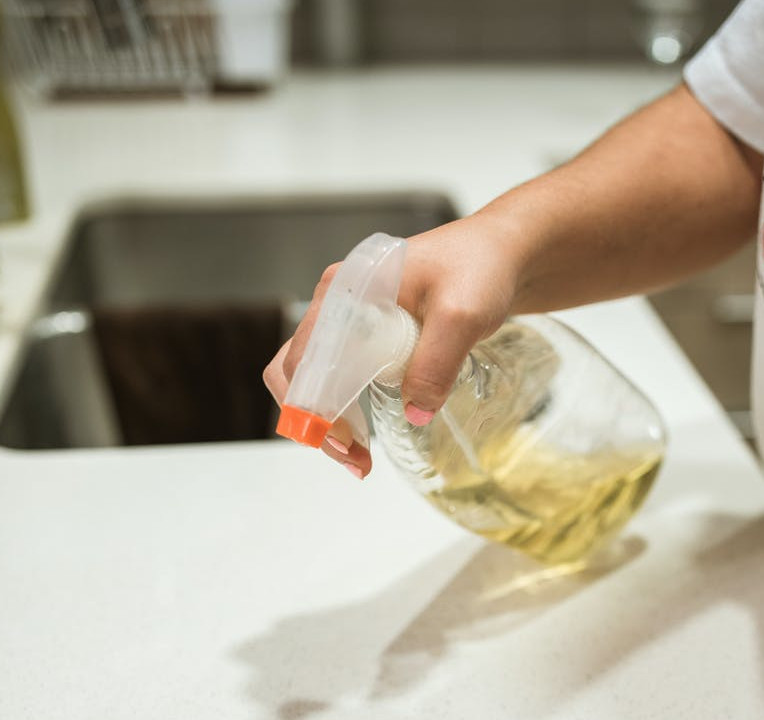
Spray undiluted white vinegar directly on the mold and leave it for an hour. Then scrub with a stiff brush or an old toothbrush, rinse with warm water, and dry the area. Vinegar works on many common household molds and doesn't have bleach fumes. It's a good first choice for grout and shower walls, but keep it off natural stone like marble, travertine and granite, because the acid etches it.
For stubborn stains on non-porous surfaces like tile, glass and tubs, mix no more than 1 cup of household bleach per gallon of water. Apply it, leave it 10 to 15 minutes, scrub, and rinse well. Bleach is very good at removing the dark stain mold leaves behind. It's less useful on porous materials, where it can whiten the surface without reaching the roots. It will also lighten colored grout.
Never mix bleach with vinegar or ammonia. Use one or the other, and rinse thoroughly before switching.
Three percent hydrogen peroxide (the brown bottle from the pharmacy) can be sprayed full-strength on mold, left for 10 minutes, then scrubbed and rinsed. It's milder than bleach and doesn't leave fumes, though it can lighten some colored surfaces, so test it first.
If the black spots are under the surface of the silicone caulk around your tub, cleaning won't fix it. The mold is inside. The fix is to cut out the old caulk with a utility knife or caulk remover, clean and dry the joint completely (give it a full day), then run a new bead of mildew-resistant silicone caulk. It's an afternoon job and makes a bathroom look much newer.
Mold spots on a bathroom ceiling usually mean the fan isn't moving enough air. Wipe the spots with a vinegar or diluted bleach solution on a sponge mop, wearing eye protection, and let it dry. If it keeps coming back, look at the fan: hold a tissue up to the cover while it runs. If the tissue doesn't stick, the fan isn't pulling.
The EPA's guidance is that a mold area larger than about 10 square feet is a job for a professional. The same goes for mold inside walls, under flooring, or anything that smells musty after you've cleaned, and for any mold if someone in the house has asthma or a weakened immune system.
Undiluted white vinegar works on many common household molds. Spray it on, leave it for an hour, scrub and rinse. Keep it off natural stone such as marble, granite and travertine, because the acid can etch the surface.
No more than 1 cup of household bleach per gallon of water, used on non-porous surfaces like tile, glass and tubs. Never mix bleach with vinegar or ammonia.
If the spots are under the surface of the caulk, the mold is inside the silicone and cleaning won't reach it. Remove the old caulk, let the joint dry completely, and apply new mildew-resistant silicone caulk.
When the moldy area is larger than about 10 square feet, when it is inside walls or under flooring, or when someone in the home has asthma or a weakened immune system.
