Before you put anything on a couch, find the cleaning tag, usually under a seat cushion or on the frame. One letter on it tells you whether water is safe, and using the wrong method can leave a ring that's worse than the stain.
If there's no tag, treat it as S and test any cleaner on the back or underside first.
Take off the cushions and vacuum the deck underneath, the crevices and the cushions themselves, using the upholstery and crevice tools. Do this before any spot cleaning; rubbing a stain on a dusty couch just grinds the dirt in.
Sprinkle baking soda over the fabric, leave it for 20 minutes or longer, then vacuum it up. It's safe on most fabrics regardless of code, since it's dry.
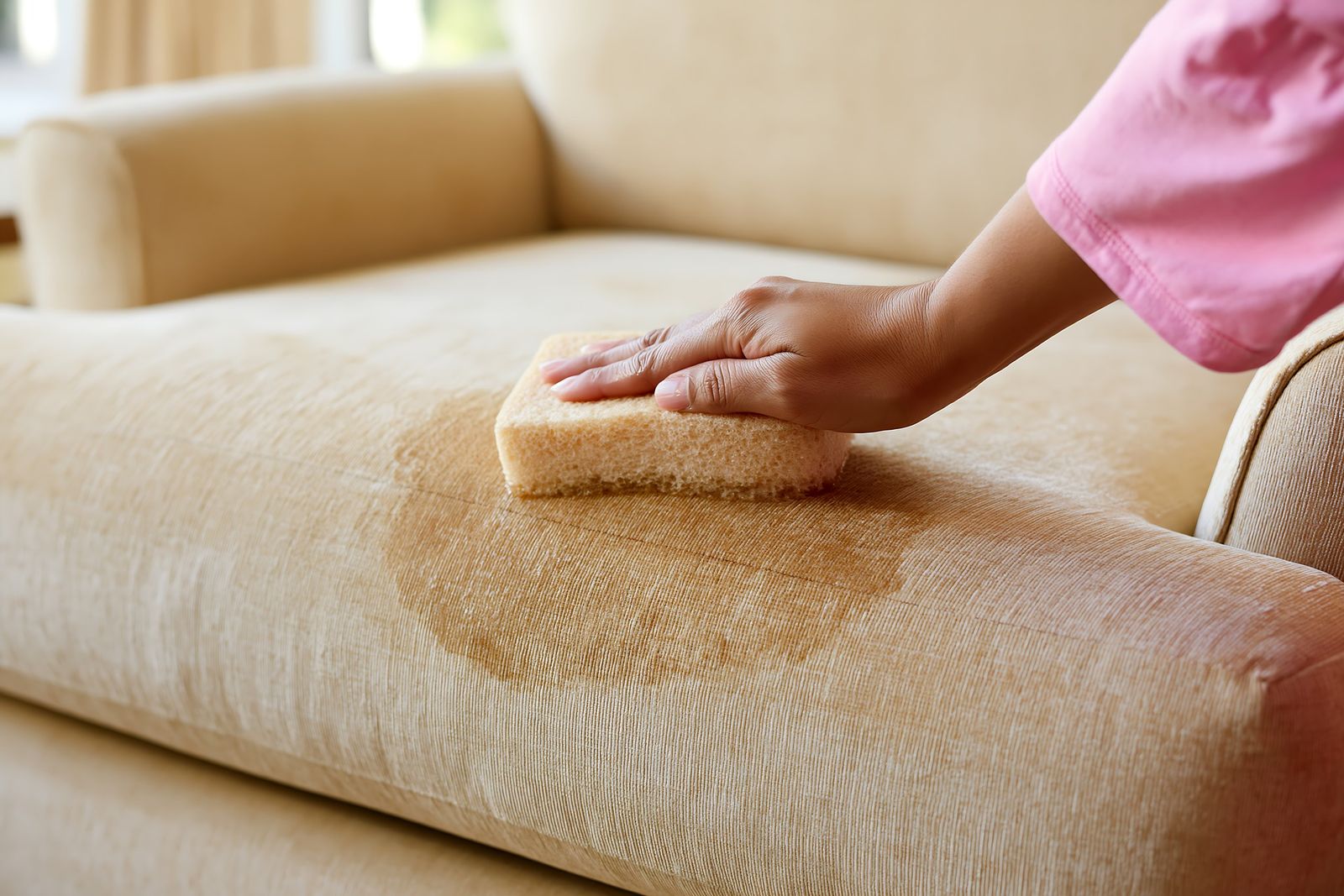
Always use white cloths so dye doesn't transfer, and blot rather than rub.
Put on a damp rubber dish glove and run your hand over the fabric. The hair balls up and comes off in clumps. A squeegee or a pumice-style pet hair stone works the same way on tightly woven fabrics. Finish with the vacuum. Our pet mess guide covers urine and odor on furniture.
Even if the covers unzip, check the tag before you wash them. Many are not meant to go in the washer, and they can shrink so they never fit back on. Zippers are often there for fitting the foam during manufacturing, not for cleaning.
Vacuum the couch weekly if you have pets, and monthly otherwise. Deodorize and spot clean as needed, and consider a professional upholstery cleaning every year or two for heavily used furniture.
W means water-based cleaners are safe, S means solvent only with no water, W/S means either is fine, and X means vacuum only. The tag is usually under a seat cushion.
Most microfiber is code S. Mist the stain with rubbing alcohol, scrub gently with a white sponge, let it dry, then brush the fibers with a soft brush.
Run a damp rubber dish glove over the fabric; the hair clumps up and lifts off. Follow with the vacuum.
Only if the care tag says so. Many cushion covers shrink in the wash and won't fit back on the foam.
