Stainless steel shows every fingerprint, and most of the streaking people fight is caused by the cleaning itself: too much product, the wrong cloth, or wiping against the grain. Warm water, a little dish soap and a microfiber cloth handle most of it.
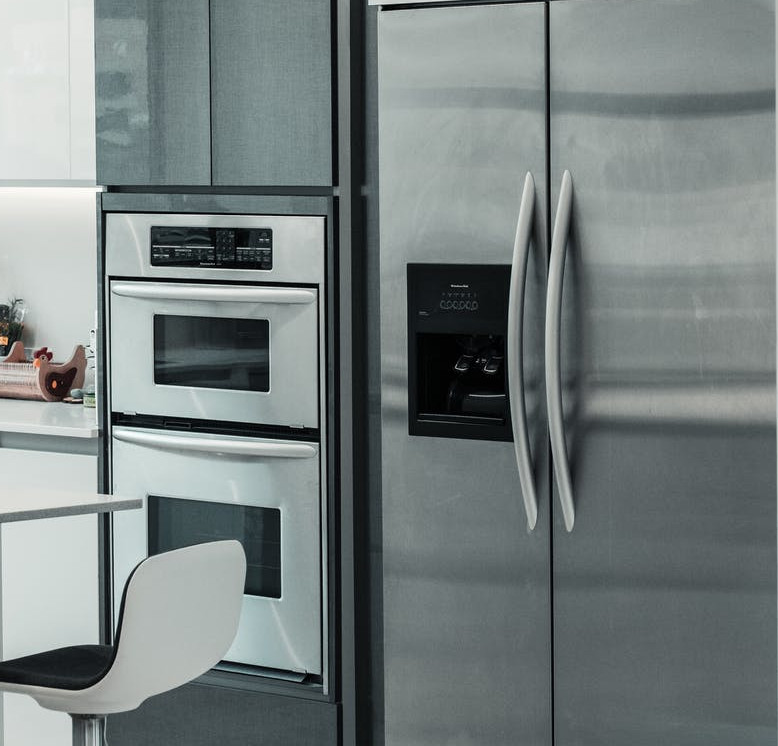
Look closely at the surface and you'll see faint lines running one direction, usually horizontal on a fridge door and vertical on a dishwasher. Always wipe along those lines. Wiping across them pushes residue into the grooves and leaves streaks.
That's enough for most smudges, splashes and fingerprints.
After cleaning and drying, put two or three drops of mineral oil or baby oil on a dry cloth and buff it on along the grain. It evens out the shine and makes the next round of fingerprints easier to wipe off. Use very little. Too much oil collects dust.
For dried-on food or grease near the stove, make a paste of baking soda and water and rub it gently along the grain with a soft cloth, then rinse and dry. A cleanser made for stainless steel, such as an oxalic acid powder, takes care of light rust spots and stubborn marks; follow the directions and rinse well.
Many newer appliances have a clear protective coating. Check your manual. On these, use only warm water with a little mild dish soap and a soft cloth. Polishes, oils and stainless steel cleaners can damage or streak the coating.
Rinse and dry the sink after use to prevent water spots. Once a week, sprinkle baking soda in the basin, scrub along the grain with a damp sponge, and rinse. Hard water spots come off with a little white vinegar on a cloth; see our hard water stain guide.
For the inside of your appliances, see cleaning and caring for your home appliances.
Wipe along the grain with a microfiber cloth dipped in warm water and a few drops of dish soap, wipe again with plain water, and dry right away with a second dry microfiber cloth.
Usually because of too much cleaner, wiping across the grain, or letting it air dry. Wipe along the grain, rinse off any soap, and dry immediately with a dry microfiber cloth.
Steel wool, scouring pads, abrasive powders, chlorine bleach and ammonia-based glass cleaners. They scratch, pit or cloud the finish.
Use only warm water with a little mild dish soap and a soft cloth. Polishes, oils and stainless steel cleaners can damage the protective coating.
