Blinds and ceiling fans collect a surprising amount of dust, and when the fan turns on, it blows that dust around the room. Both are quick jobs if you use the right trick, and doing them once a month keeps them from turning into a sticky mess.
Turn the fan off and let it stop completely. Set up a sturdy step stool or ladder. Slide an old pillowcase over one blade, all the way to the motor, then press the fabric against the top and bottom of the blade as you pull it back toward you. The dust stays inside the pillowcase instead of falling on you and the bed. Repeat for each blade, then shake the pillowcase out outside and wash it.
For a greasy fan (common in kitchens), follow up with a cloth dampened with warm water and a little dish soap, then a dry cloth. Wipe the motor housing and the light fixture too. Don't spray cleaner directly on the motor.
Safety: don't stand on a chair with wheels or a wobbly surface, and don't stretch to reach. Move the ladder instead.
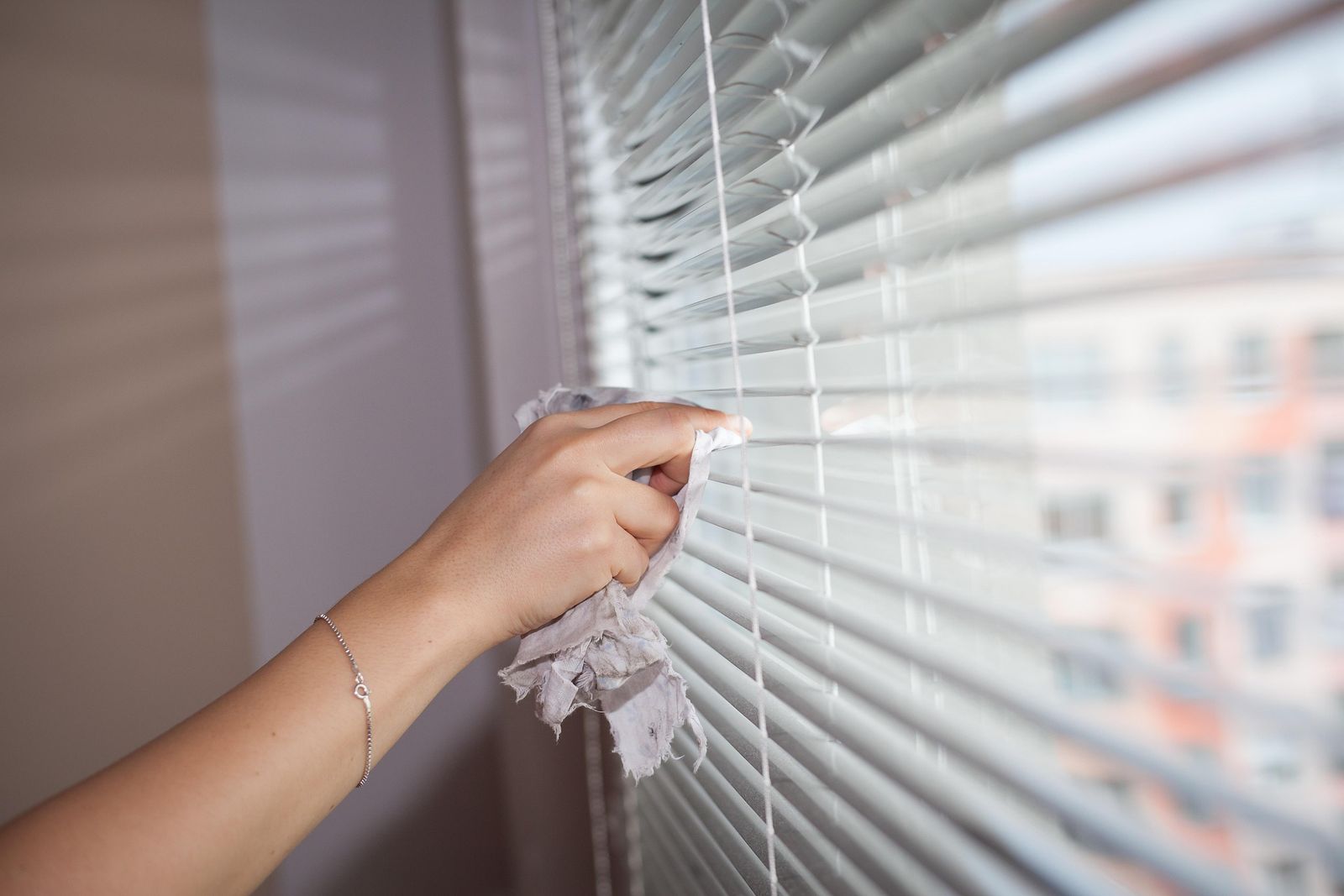
Close the blinds so the slats lie flat. Dust from the top down with a microfiber cloth, a duster, or a clean sock over your hand. Then turn the slats the other way and do the other side. Vacuuming with a brush attachment works too and is faster for wide windows.
While the blinds are open, wipe the window sill and the track. If the glass needs it too, our window cleaning guide covers getting it streak-free.
Dust ceiling fans and blinds once a month, more often in kitchens, homes with pets, or during allergy season. Deeper washing once or twice a year is usually enough.
Turn off the fan, slide an old pillowcase over each blade, and press the fabric against the blade as you pull it back. The dust stays inside the pillowcase. Wash the pillowcase afterward.
Close them flat, dust from the top down with a microfiber cloth or a vacuum brush attachment, then turn the slats and do the other side.
No. Water warps real wood and can damage faux wood finishes. Dust them and wipe with a barely damp cloth, then dry immediately.
About once a month, and more often in kitchens, in homes with pets, or during allergy season.
