Walls and baseboards get dirtier than they look, mostly from dust, hands and the vacuum. The main risk in cleaning them isn't the dirt, it's the paint: flat and matte finishes can go shiny or patchy if you scrub them. Start gentle and test first.
Always test in a spot that doesn't show, like behind a door.
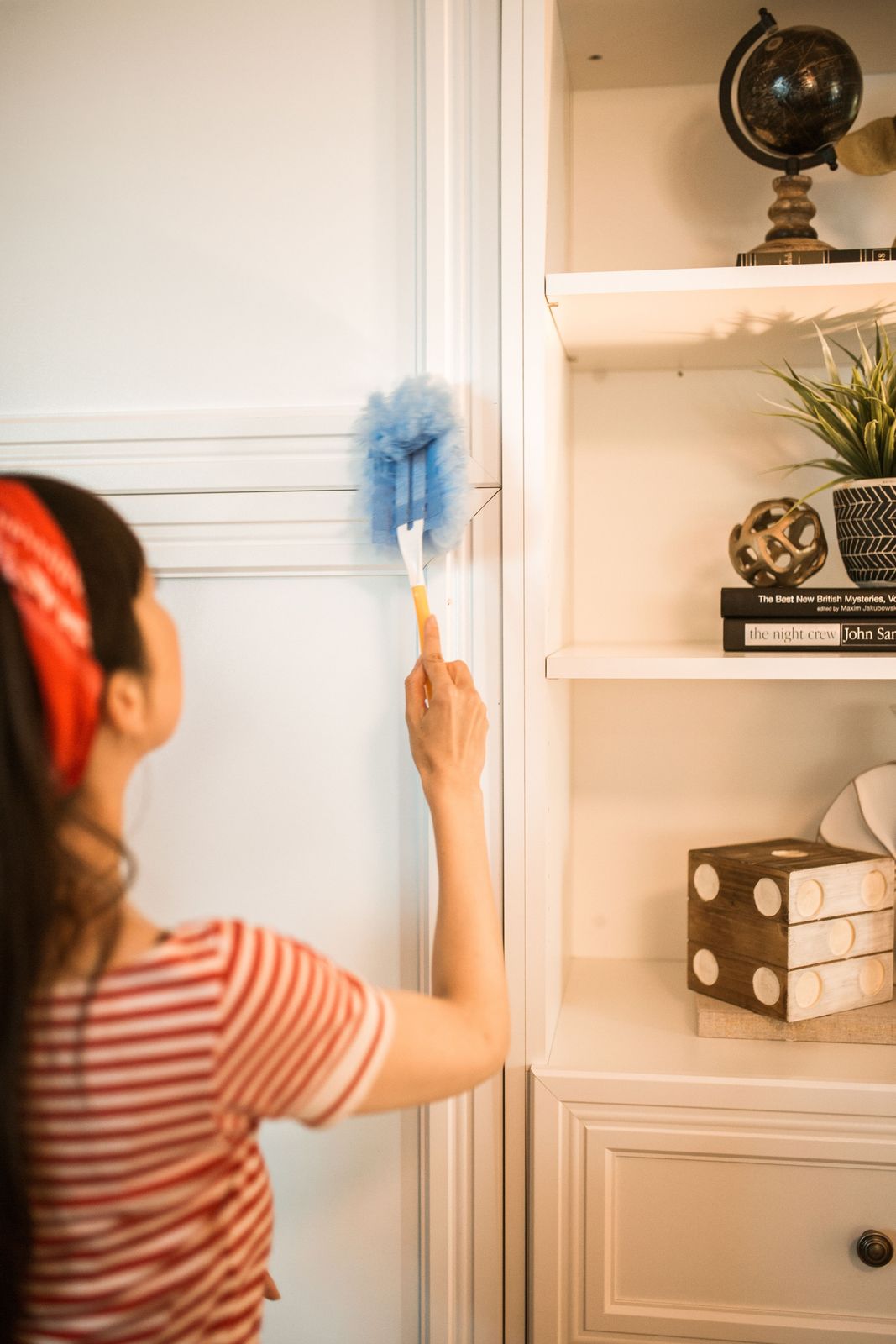
Vacuum them first with the brush attachment, or wipe with a dry microfiber cloth. Then wipe with a cloth dipped in warm water and a few drops of dish soap and wrung out well. For dried-on dirt, a little more soap and a soft brush. Dry them as you go. Doing this kneeling with a bucket is hard on the back; a microfiber mop head with a short handle lets you do it standing. For grimy corners, an old toothbrush helps.
Doors collect hand oils around the knob and the edge. Wipe the whole door with mild soapy water, paying attention to the area around the handle, then dry. Clean the knobs and handles with a disinfecting wipe or a cloth with rubbing alcohol. Wipe the top edge of the door and the door frame, which most people never clean.
Melamine foam erasers work very well on scuffs, but they're mildly abrasive. On flat and matte paint they can rub off pigment and leave a shiny spot that looks worse than the mark. Use them lightly and only on satin or glossier finishes, and test first.
Dust baseboards monthly and wash them every few months. Wash walls in kitchens, hallways and kids' rooms once or twice a year, and spot clean in between. It's one of the bigger items on our spring cleaning checklist.
Vacuum or dry-dust them first, then wipe with a well-wrung cloth dipped in warm water with a few drops of dish soap, and dry as you go.
Dust first, use warm water with a little dish soap on a barely damp sponge, wash from the bottom up and rinse from the top down, and test in a hidden spot. Flat and matte paint should only be wiped lightly.
Use melamine foam erasers lightly and only on satin, semi-gloss or gloss paint. They are mildly abrasive and can leave a shiny patch on flat or matte finishes.
Rub gently with a damp cloth and a little baking soda, or warm the crayon slightly with a hair dryer and wipe it away.
